— Ben Laube Homes Blog
Reading a Florida Builder Contract: The 7 Clauses That Bite Buyers
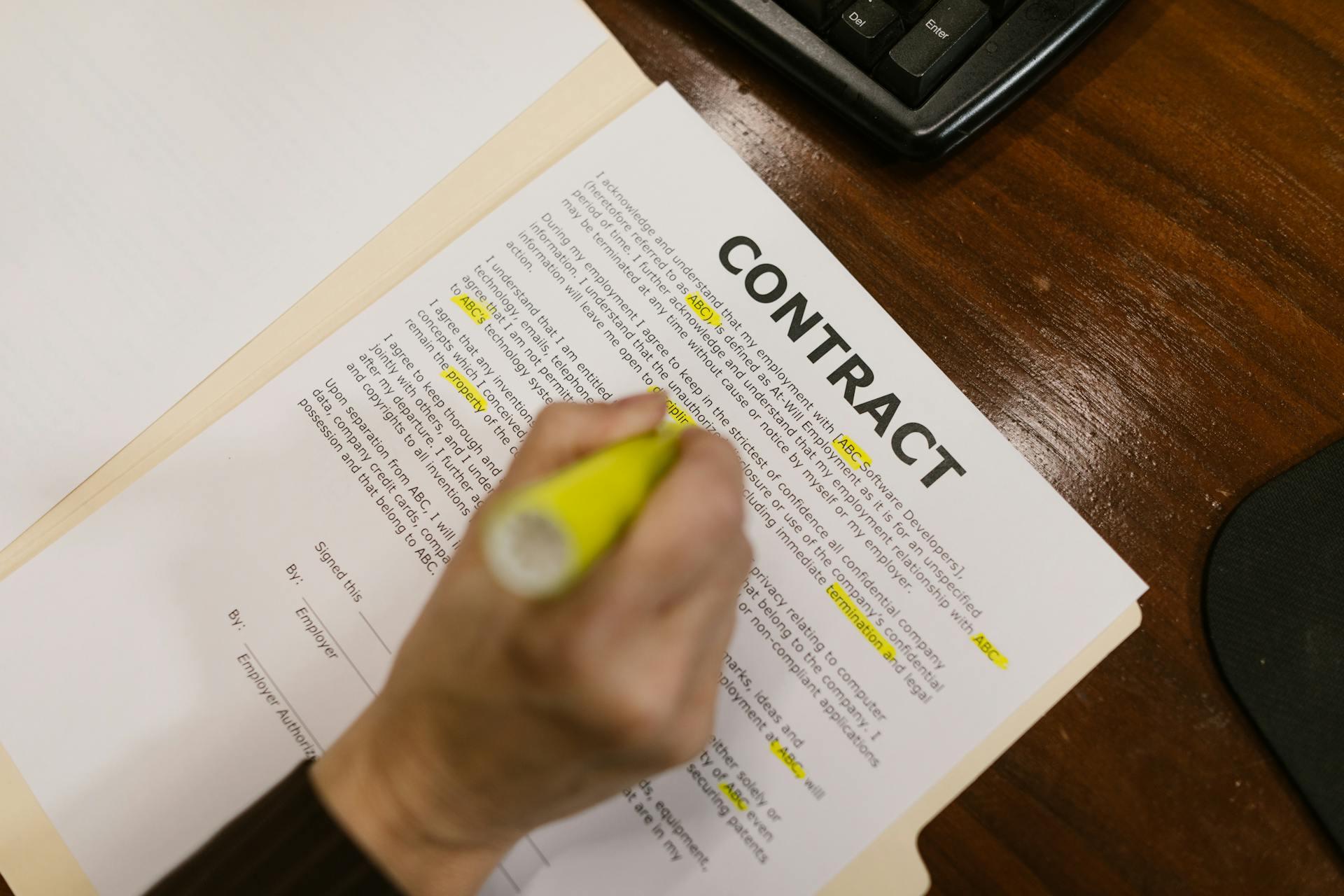
The builder handed you a contract. It is probably 40 to 80 pages. The sales rep was pleasant, the model home smelled like fresh paint and possibility, and you were told the form is standard. That last part is technically true — it is the builder's standard form, drafted by their legal team, for their benefit.
That does not mean it is adversarial, necessarily. Most large-volume Florida builders — D.R. Horton, Lennar, Pulte, Meritage, Taylor Morrison — produce professionally structured contracts. But there are specific clauses in every one of these agreements that regularly surprise buyers at closing, or worse, mid-construction when it is too late to negotiate.
This is a plain-English walkthrough of the seven clauses I flag for every client buying new construction in Central Florida and Tampa Bay. This is educational context, not legal advice — on contracts above $400K, I recommend a real estate attorney review before you sign.
1. Delivery-Date Language
Builder contracts almost never commit to a specific closing date. What they commit to is something like 'substantially complete,' 'ready for occupancy,' or 'certificate of occupancy issuance' — all of which can mean different things depending on the builder's definition buried deeper in the document.
Substantially complete is the most elastic term. Florida courts generally define it as completion of construction to the point where the structure can be used for its intended purpose, even if minor punch-list items remain open. Builders use this standard because it gives them flexibility to schedule your closing before the property is completely finished.
The practical problem for buyers: your rate lock has an expiration date. Standard rate locks in 2024 run 45 to 60 days. If the builder delays — and delays are common for any number of reasons, legitimate and otherwise — you may face a lock extension fee or need to re-lock at a higher rate. Extension fees typically run 0.125% to 0.25% per 30-day extension on a $400,000 loan — that is $500 to $1,000 per extension period.
On top of that, if you are already in an apartment or have sold your home contingent on the new build completing, a delay creates either a month-to-month rent overlap, a lease extension cost, or the awkward situation of asking family to store furniture. A four-to-six week delay is not unusual. An eight-to-twelve week delay happens.
What to watch for: Does the contract specify consequences if the builder misses the projected close window? Most do not hold the builder to any penalty. Some do include a buyer right to cancel after a prolonged delay — 180 days or more past the original projected date is a common threshold. Read what triggers that right carefully, because the clock often does not start until the builder sends a specific notice.
2. Force-Majeure Scope
Every builder contract has a force-majeure section. In Florida, this section grew longer after 2020 and 2021, when supply chain disruptions and labor shortages hit new construction hard across Hillsborough, Pinellas, Orange, and Osceola counties.
Classic force-majeure events — hurricanes, wildfires, tornadoes, flooding — are expected and reasonable. The issue is what builders added to those lists starting in 2021: supply chain disruptions, material shortages, subcontractor unavailability, labor shortages, government permit delays, and utility connection delays. Some contracts go further with catch-all language like 'any event or circumstances beyond the builder's reasonable control.'
With language that broad, nearly any delay can be classified as a force-majeure event, which typically extends the projected close date without penalty and without giving the buyer a cancellation right. You could be waiting an additional four to six months with no remedy.
What a buyer's agent negotiates here: I push for two things. First, a defined list of qualifying force-majeure events rather than an open-ended catch-all. Supply chain disruptions are real, but 'any event beyond our control' is a blank check. Second, a total aggregate delay cap — if the sum of all force-majeure delays exceeds a defined threshold (six months is a reasonable starting point), the buyer gets a cancellation right with full deposit refund.
3. Price-Escalation Clauses
Since 2021, a significant share of Florida production builders include price-escalation provisions in their contracts. These allow the builder to pass through documented increases in material costs — lumber, concrete, roofing materials, drywall — between contract signing and closing.
Lumber is the most common trigger. Framing lumber prices swung dramatically from 2020 through 2024: a low of around $300 per thousand board feet in early 2020, a peak above $1,700 in May 2021, back below $400 by late 2022, and volatile again through 2023 and 2024. When lumber doubles between your contract date and framing, builders argue they need to recoup that difference.
The buyer risk is obvious: you signed a contract for $385,000 and receive a notice eight weeks before closing that material escalations have increased the price to $406,000. You have already given the builder your deposit, paid for design center upgrades, and potentially listed your current home.
Key contract language to identify: Does the escalation clause have a cap — a maximum percentage or dollar amount the price can increase? A cap of 3% to 5% is more defensible than an uncapped clause. Does the builder have to provide documentation — actual invoices showing material cost increases? Some contracts require this; some do not. Is the escalation mutual — does the contract require a price reduction if material costs fall between signing and closing? Almost never, but worth asking.
The larger Florida production builders — D.R. Horton, Lennar — have generally moved away from escalation clauses in 2023 and 2024 as material costs stabilized, but smaller regional builders and semi-custom builders still use them regularly. Read Section 4 or whichever section is titled 'Purchase Price' or 'Contract Price' carefully.
4. Earnest Money and Deposit Forfeiture
Builder deposit structures are more aggressive than resale contracts. On a resale transaction in Florida, you typically put up 1% to 3% of the purchase price as earnest money, held in escrow by the title company or brokerage. If the deal falls apart over a contingency the buyer holds, the deposit comes back.
Builder contracts work differently. Common structures include: 1% to 2% at contract signing, another 3% to 5% at design center finalization (typically 30 to 45 days after contract), and sometimes an additional deposit at certain construction milestones. Total deposits of 5% to 10% of the purchase price are standard. On a $450,000 home, that is $22,500 to $45,000 at risk.
What triggers forfeiture is the critical question. Resale contracts typically have contingencies that allow buyers to exit without penalty. Builder contracts frequently have limited contingency periods — sometimes as short as 10 to 14 days for the inspection review — and the financing contingency, if it exists at all, may not extend to cover the full construction period.
If you are denied financing at closing because rates moved, your income changed, or the property appraises below the contract price, some builder contracts treat that as a buyer default. Your deposit is forfeit as liquidated damages.
Under Florida Statute 489.126, builders are required to place buyer deposits into an escrow or trust account, with specific conditions for disbursement. Buyers can waive this requirement in writing — and some builder contracts ask you to do exactly that, allowing the builder to use your deposit funds for construction. Understand what you are waiving before you sign.
The refundable vs. non-refundable split is rarely clean. Ask specifically: under what conditions is each deposit installment refundable? What constitutes a buyer default versus a builder default? What is the timeline for deposit return if the builder cancels?
5. Design Center Commitments and Builder Substitutions
The design center visit is one of the most financially consequential and least legally protected parts of the new-construction process. You sit with a design consultant for two to four hours, selecting everything from flooring to cabinet pulls to countertop material. It feels informal. It is not.
What happens at the design center becomes legally binding the moment you sign the design center addendum. That addendum is a contract amendment. Every upgrade you select — extended tile, quartz instead of laminate, the outdoor kitchen rough-in, the tray ceiling package — is now a line item that is either fully paid at the design center appointment or becomes a balloon charge you pay at closing on top of your down payment and loan.
Design center commitments are typically non-refundable the moment you sign. If you change your mind about the extended hardwood three months after signing, the builder will often allow the change but charge you again for the modification rather than crediting the original selection. Some contracts are explicit about this; others are not. Verbal confirmations from a design consultant — 'yes, we can swap that out later' — carry no weight. If it is not in a signed change order, it did not happen.
The substitution risk runs the other direction too. Builder contracts contain a right to substitute materials of equal or greater value when specified products become unavailable. Equal or greater value is defined by the builder, not by you. If the Italian tile you selected goes out of stock, the builder substitutes what they have on hand. You have limited ability to refuse if the substitution is documented as equivalent under the contract language.
What to do: at the design center appointment, get every selection in writing before you leave the room, confirm the refund policy on each item, and ask explicitly about the process for changes after signing. Anything a design consultant tells you verbally should be followed up in writing via email, which creates a paper trail even if it is not a signed amendment.
6. Warranty Carve-Outs
Florida enacted a new statutory warranty requirement effective July 1, 2025, under Florida Statute 553.837. Builders of newly constructed homes must now provide a one-year warranty covering construction defects in materials, equipment, or workmanship that result in a material violation of the Florida Building Code. Before this statute, Florida had no mandatory builder warranty requirement — the warranty coverage you received depended entirely on what the builder offered voluntarily.
For homes built before July 1, 2025, and for contracts signed after that date where the warranty exceeds the statutory minimum, you are dealing with whatever the builder's express warranty document says. Read it. These documents can run 10 to 20 pages and the exclusions are where the real risk sits.
Common one-year warranty exclusions across major Florida builders:
- Normal settling — hairline cracks in drywall or stucco are typically classified as normal settling and not covered, even if they appear in the first six months
- Normal shrinkage of wood components — trim gaps, door framing movement, and wood flooring gapping are excluded in most warranties
- Cosmetic blemishes that meet paint and finish tolerances — a single blemish under a defined diameter is within tolerance
- HVAC filter maintenance and duct cleaning — any complaint traced to filter neglect is excluded
- Pest damage — standard warranty language excludes damage from insects or rodents after closing
- Items covered by manufacturer warranties — your appliances, water heater, and HVAC equipment may have their own warranties, but those are now your responsibility to register and enforce directly with the manufacturer
The 10-year structural warranty — sometimes called a major structural defect warranty — typically transfers with the home for the first 10 years after the original certificate of occupancy. Covered defects include load-bearing wall failure, foundation movement, roof framing failure. This sounds comprehensive but the bar for what qualifies as a major structural defect is high. Settlement cracks do not clear it. Foundation movement short of causing structural instability does not always clear it either.
The escalation path for warranty claims matters too. Most builder warranty programs require written notice within a specific window (often 30 days of discovering the defect), an inspection by the builder's warranty team, and a defined repair timeline. Missing that notice window, even by a few days, can void coverage on that specific item. Document everything in writing from the start.
7. Arbitration, Venue, and Jury Trial Waivers
Almost every production builder contract in Florida contains three dispute-resolution provisions that buyers routinely sign without reading: a mandatory arbitration clause, a venue clause, and a jury trial waiver.
The mandatory arbitration clause requires that any dispute between you and the builder be resolved through private arbitration rather than the court system. In Florida, arbitration agreements in contracts are generally enforceable. What this means practically: if you have a dispute over a construction defect, a warranty claim the builder denies, or a deposit forfeiture, you go to an arbitration forum — typically the American Arbitration Association (AAA) or JAMS — not the local circuit court. Arbitration is faster than litigation, but it is also private, discovery is limited, and arbitrators tend to know the industry well in both directions.
The venue clause specifies where any legal proceeding — including arbitration — will take place. Builder contracts almost universally name the county where the builder's principal office is located, not the county where your home is being built. If you are buying in Osceola County and the builder is based in Collier County, your dispute proceeds in Collier County. This is an inconvenience at minimum and a real cost barrier for smaller claims.
The jury trial waiver is the most overlooked clause. Florida courts have enforced express pre-dispute jury trial waivers in contracts between commercial parties, and courts have generally applied that same standard to residential real estate contracts when the waiver is clear and conspicuous. Some builder contracts make this waiver obvious; others embed it in a standard terms section with small type. You are waiving a constitutional right. Read it.
None of this makes the builder's contract unacceptable — it is standard practice in the production-home industry. But understanding what you are agreeing to before you sign is different from discovering it when a dispute arises.
Already Mid-Contract? Here Is What You Can Still Do
If you are past the initial signing and wondering whether any of the above applies to your situation, you have more leverage than you think — at specific milestones.
Between contract signing and the design center appointment, you have the most flexibility. This is the window to negotiate addenda, push for escalation caps, and ask for a clearer refund policy on deposits. Most buyers do not negotiate here because the sales rep implies the form is non-negotiable. Large builders will not rewrite their standard contract from scratch, but they will agree to specific addenda on focused points — especially if you are using a buyer's agent who has a relationship with their sales team.
After the design center appointment and before the builder pours the slab, you can still push for change-order modifications, clarifications on the substitution rights, and written confirmation of anything you were told verbally.
Once construction begins, the leverage shrinks but does not disappear. If the builder misses a projected milestone significantly, you may have grounds to renegotiate the close date. If a material substitution happens that you object to, document it immediately in writing and request documentation that the substitute meets the 'equal or greater value' standard.
At the final walk-through — typically 48 to 72 hours before closing — you get a formal punch-list opportunity. Items identified at that walk-through go on a written list the builder commits to addressing, either before closing or within a defined window post-closing. Do not skip the walk-through. Bring a friend with a critical eye, or hire a new-construction inspector. This is your last significant leverage point before you own the home.
If you are navigating a builder contract right now and want a second set of eyes, reach out. I have worked through these contracts with buyers across Orlando, Tampa, and St. Pete — from 55+ communities in Sarasota to Toll Brothers product in Lake Nona to D.R. Horton spec homes in Wesley Chapel. The issues above come up in nearly every one.
More context: /new-construction, /buying-guide, and the /blog/florida-real-estate-closing-process post cover the broader purchase process and closing costs. The /blog/what-contingencies-to-waive post applies to resale contracts but the contingency-thinking is relevant here too.
Frequently Asked Questions
Can I negotiate a Florida builder contract, or is it truly take-it-or-leave-it?
You cannot rewrite it from scratch, but you can negotiate specific addenda. Escalation caps, force-majeure aggregate limits, and venue amendments are the most commonly negotiated points. Having a buyer's agent with builder relationships makes this easier — sales teams respond differently to agents they work with regularly than to buyers calling directly.
What happens to my deposit if the builder goes out of business mid-construction?
Under Florida Statute 489.126, builders are supposed to hold buyer deposits in escrow. If they comply with that requirement, your funds are protected. If the builder obtained a written waiver of escrow from you — and some contracts do include this — your deposit is potentially a general creditor claim in a bankruptcy. Never waive the escrow requirement without understanding the risk.
Is the builder's lender incentive worth taking?
Builders offer closing cost credits or rate buydowns if you use their preferred lender — sometimes $5,000 to $15,000 in credits on a $400,000 home. That is real money. The trade-off is that the builder's lender has no contractual obligation to give you the best rate available. Get a competing quote from an independent lender on the same loan type. If the builder's lender is within 0.125% and the credit clears more than you would save, take the credit. If not, use your own lender.
Does the new Florida statutory warranty (553.837) replace what is in my contract?
It establishes a floor. If your contract's warranty is less than the statutory minimum, the statute governs. If your contract's warranty exceeds the statutory minimum — as most major production builders' warranties do — the contract warranty controls on items it covers. The statute applies to homes where closing occurred on or after July 1, 2025. For homes that closed before that date, the contract warranty is your only protection.
Can I use a home inspector for new construction?
Yes, and I recommend it at two stages: a frame/pre-drywall inspection before the walls close in, and a final inspection 24 to 48 hours before closing. The builder's own walk-through is not a substitute — they are looking for items that need to be addressed for certificate of occupancy, not for items that affect long-term habitability. An independent inspector looking at framing, electrical rough-in, and HVAC ductwork before drywall goes up can catch issues that are nearly impossible to fix later.
What if the property appraises below the contract price?
Builder contracts typically do not include an appraisal contingency. If the home appraises below your contracted price, your lender will only finance against the appraised value. You either make up the gap in cash, renegotiate the price with the builder (rare but possible on spec inventory), or walk away and potentially forfeit your deposit. The appraisal gap risk is real, especially on semi-custom builds where you selected significant upgrades at the design center that inflated the contract price above comparable sales.
Nearby
Neighborhoods featured in this post
Questions about your own market?
Reach out for a tailored take on your neighborhood, timeline, or price band.