
— Ben Laube Homes Blog
Pre-Approval vs. Pre-Qualification: What the Difference Means in Florida
Every buyer hears the same advice: get pre-approved before you start looking. What that advice skips is the difference between pre-qualification and pre-approval — two documents that sound similar, carry different weight, and matter enormously in a multiple-offer situation.
I have watched buyers lose homes on Snell Isle, in South Tampa, and in Horizon West because they showed up with a pre-qualification letter when the competing offers came in with full pre-approvals. The seller did not take a risk. Neither would you.
What pre-qualification actually means
Pre-qualification is an estimate. You tell a lender your income, your debts, and your assets. The lender runs rough math and tells you what loan amount you might qualify for. Most lenders do not pull a hard credit report at this stage. No documents are verified. The number on that letter is based on information you supplied, not information anyone confirmed.
Pre-qualification can take 15 minutes online. That speed is a clue. No one is checking W-2s, bank statements, or tax returns in 15 minutes. The letter you receive says, in effect: if everything this buyer told us is accurate, they could probably get a loan around this amount.
Pre-qualification is useful for one thing: getting a rough sense of your price range before you start shopping. It is not a commitment from a lender. It is not a meaningful signal to a seller.
What pre-approval actually means
Pre-approval involves a real application. The lender collects and verifies your documents — pay stubs, W-2s from the past two years, federal tax returns, bank statements, retirement account statements. They pull a hard credit report and review your actual FICO scores and debt history. An underwriter or automated system evaluates your file against loan guidelines.
The output is a conditional commitment: the lender will fund a loan up to a specified amount, subject to the property appraising and no material changes to your financial situation between now and closing. That conditionality is important — pre-approval is not a loan guarantee — but it is a document backed by real data, real income verification, and a real credit pull.
In Florida, the minimum credit score for a conventional loan is 620, though lenders prefer 740+ for the best rates. FHA loans can go as low as 580 with a 3.5% down payment. Your debt-to-income ratio (DTI) — total monthly debt payments divided by gross monthly income — typically needs to be under 43% for conventional loans, though some programs allow up to 50% with compensating factors like strong reserves or a high credit score.
How the difference plays out in a competitive Florida market
In Tampa Bay and Central Florida, the well-priced home in a solid neighborhood still draws multiple offers. A three-bedroom in St. Pete’s Kenwood area, a waterfront townhome in Dunedin, a move-in-ready house near Winter Park — these see two, three, five buyers competing within the first weekend.
When a listing agent reviews competing offers, pre-qualification and pre-approval are not equivalent. A pre-qualification letter tells the agent that a buyer said they could afford this. A pre-approval letter tells the agent that a lender reviewed the buyer’s income, assets, and credit, and is conditionally committed to funding. That difference changes the risk calculus for the seller.
“Sellers in Florida do not owe you a counter-offer. If two offers come in and yours has a pre-qualification while the other has a pre-approval, the seller often goes with the stronger paper — even if your price is slightly higher.”
I have seen buyers win bidding wars on a lower offer because their financing was clearly stronger. The seller’s goal is not just the highest price — it is the highest price that will actually close. Financing risk is one of the biggest reasons deals fall apart in Florida.
The third tier: underwritten pre-approval (DU approval)
Above a standard pre-approval sits what is sometimes called an underwritten pre-approval, a credit approval, or a DU approval (DU stands for Desktop Underwriter, Fannie Mae’s automated underwriting system). This is where the lender runs your complete file through the underwriting system before you are even under contract on a specific property.
A DU approval means a computer system reviewed your income, assets, debt, and credit against conventional loan guidelines and issued an automated approval — subject only to a satisfactory appraisal of the specific home you buy. The human underwriter still reviews the file, but the system’s approval removes a significant chunk of financing uncertainty.
In practice, this matters most in three situations: when competing against cash buyers, when the seller is nervous about deal risk after a prior buyer fell through, and when you are targeting a home priced near your ceiling and the seller’s agent wants to see solid underwriting before accepting your offer. If your lender can turn around a DU approval before you write your first offer, that is worth asking for.
What you need to get pre-approved in Florida
- Two most recent pay stubs (or profit and loss statement if self-employed)
- W-2s from the past two years
- Federal tax returns from the past two years (self-employed buyers: all schedules)
- Two to three months of bank statements for all accounts you plan to use for down payment and reserves
- Investment and retirement account statements if using those for assets
- Government-issued ID
- Authorization to run a hard credit inquiry — expect your scores to be pulled across all three bureaus (Equifax, Experian, TransUnion)
Florida-specific note: if you are buying with VA or USDA financing, you will also need your Certificate of Eligibility (VA) or proof of rural-eligible property address (USDA). FHA loans require a Social Security number for both borrowers on a joint application.
Self-employed buyers in Florida often run into trouble because their tax returns show reduced net income after deductions. Lenders use your reported net income, not your gross receipts. If you have been self-employed for fewer than two years, some lenders will not count that income at all. Plan for this if it applies to you.
How long pre-approval is valid — and when to apply
Pre-approval letters in Florida are typically valid for 90 days. After that, the lender will need to re-pull your credit and verify that your financial situation has not changed materially.
The hard credit pull that comes with pre-approval does appear on your credit report. If multiple mortgage lenders pull your credit within a 14- to 45-day window (the exact window depends on which FICO scoring model the lender uses), the credit bureaus treat all those pulls as a single inquiry for scoring purposes. So rate shopping across two or three lenders in a short window does less damage to your score than spreading those pulls out over months.
Timing guidance: do not get pre-approved six months before you plan to buy. Get pre-approved when you are ready to make an offer within the next 60 to 90 days. If you are not ready to move yet, start with pre-qualification to get your bearings, then convert to a full pre-approval when you are serious.
Local lender vs. online lender in Florida
One factor Florida listing agents pay attention to: the lender. A pre-approval letter from a local lender or a regional credit union carries more weight than one from a large online lender in some situations — particularly on seller’s market transactions where the listing agent is choosing between multiple offers.
The reason is practical, not snobbishness. A listing agent who has closed deals with a Tampa Bay local lender knows that lender’s timelines, knows they can pick up the phone and get a straight answer, and has seen deals close. An online lender is an unknown. On a borderline decision between two offers, that familiarity can matter.
That said, online lenders are often competitive on rates and efficient on paperwork. The right move is to shop two or three lenders — compare rates, fees, and loan terms — but understand that if you get to a competitive offer situation, your agent may recommend strengthening your position with a local lender letter if you have one.
Common questions
Does pre-approval guarantee I will get the loan?
No. Pre-approval is conditional. The most common conditions are: the property must appraise at or above the purchase price, your financial situation must not change materially between pre-approval and closing (no new credit accounts, no job changes, no large unexplained deposits), and the title search must come back clean. Changes to your credit, income, or debt load between pre-approval and closing can jeopardize the loan.
Can I get pre-approved if I have student loans?
Yes — student loans count toward your DTI, but they do not automatically disqualify you. The lender will use either your actual monthly payment or a calculated payment (typically 0.5% to 1% of the outstanding balance per month, depending on the loan type and lender) when figuring your DTI. Income-driven repayment plans can complicate this — some lenders will use the IDR payment while others use a higher estimated payment. Confirm this with your lender early.
What credit score do I need to buy in Florida?
The minimums: 620 for conventional loans (some lenders require 640), 580 for FHA with 3.5% down (500-579 requires 10% down), 640 for USDA streamlined approval, and 580-620 for VA loans depending on lender overlays. In practice, a 700+ score gets you meaningfully better rates and easier approval. A score above 740 puts you in the top pricing tier for conventional financing.
Does Hometown Heroes require a pre-approval?
Yes. Florida’s Hometown Heroes program (down payment assistance of up to $35,000 for qualifying first responders, educators, healthcare workers, and other public-sector occupations) requires a full mortgage pre-approval from an approved lender before funds can be reserved. The program has income limits — $128,250 for most Florida counties — and the income limit is tied to gross household income, not just the borrower’s income. Confirm current eligibility with an approved lender; income limits and available funding fluctuate.
Nearby
Neighborhoods featured in this post
 Featured
South Tampa
Tampa
Historic + contemporary mix stretching from Bayshore Boulevard to MacDill. Top-rated schools and walkable village pockets.
 Featured
Snell Isle
St. Petersburg
Dockside estates on a Mediterranean-inspired island, moments from downtown St. Pete.
 Featured
Winter Park
Winter Park
Tree-lined streets, Park Avenue shops, Rollins College, and a chain of lakes at the northern edge of Orlando.
 Featured
Horizon West
Winter Garden
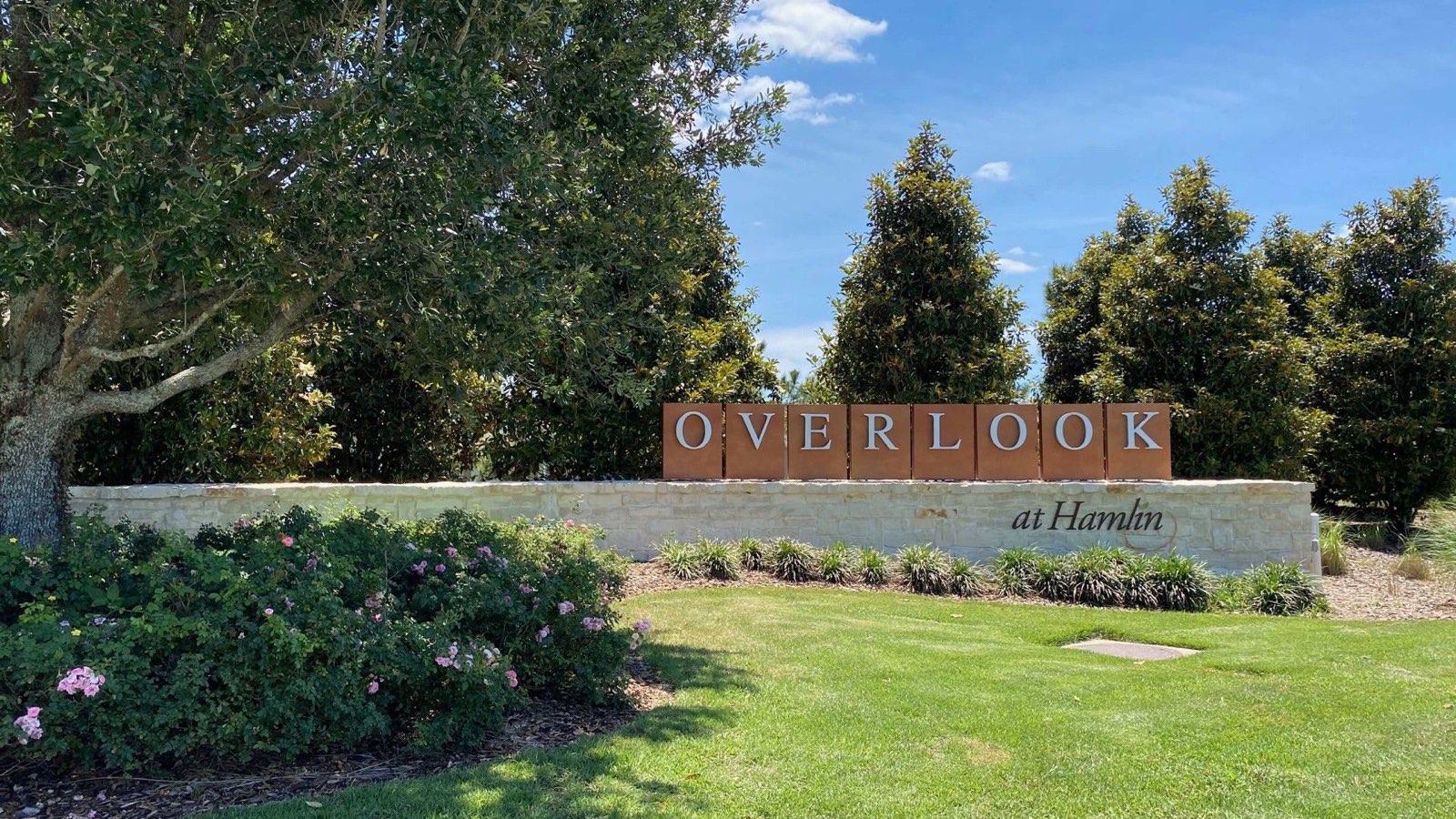
Orange County's largest master-planned community — 20,000+ acres organized into distinct villages (Hamlin, Lakeside, Bridgewater) with its…
Questions about your own market?
Reach out for a tailored take on your neighborhood, timeline, or price band.