
— Ben Laube Homes Blog
St. Petersburg Waterfront Neighborhoods: A Neighborhood-by-Neighborhood Guide
St. Petersburg sits on a peninsula surrounded on three sides by water — Tampa Bay to the east, the Intracoastal Waterway and Boca Ciega Bay to the west, and the open Gulf barrier islands just across the bridges to the south. That geography means an unusually high share of the city has some form of water access or water proximity.
But waterfront in St. Pete is not one thing. Venetian Isles means deep sailboat-depth canals with unobstructed Tampa Bay access. Shore Acres means neighborhood-street flooding during a bad storm surge. Tierra Verde means island living south of the Skyway with Fort De Soto as your backyard. Each carries a different price, different flood reality, and a different buyer profile.
I work with buyers across all of these neighborhoods. Here is what I tell them when they ask which one fits their situation.
Old Northeast
Old Northeast is St. Pete's most architecturally significant neighborhood — blocks of Mediterranean Revival, craftsman bungalows, and colonial revival homes built between the 1910s and 1940s, most with Chicago brick or original hardwood. It borders Coffee Pot Bayou and Tampa Bay directly but most of the neighborhood sits on higher ground inland.
The waterfront here is Coffee Pot Bayou Road, which runs along the bayou and has a public walkway alongside it. Most homes on Coffee Pot have docks, but depth is shallow — typically 3–5 feet at low tide, fine for small powerboats and kayaks, not for anything with a 4-foot draft. True deep-water access requires a short ride to the main bay.
Flood zone: The bayou-adjacent streets (Coffee Pot Blvd, Coffee Pot Dr NE) are in AE. The interior blocks — the ones with the best historic architecture — are largely Zone X. This bifurcation matters: you can live in the neighborhood and avoid mandatory flood insurance if you buy one block off the water.
Price range 2026: $600,000–$1.8M for single-family. The best examples of Mediterranean Revival on the bayou exceed $2M. Interior X-zone homes in the $600K–$900K range are some of the best value for historic architecture in Pinellas County.
HOA: No mandatory HOA. The Old Northeast Neighborhood Association exists but membership is voluntary. No deed restrictions.
Schools: Woodlawn Elementary, John Hopkins Middle, St. Petersburg High School zoned. Several families in the neighborhood use St. Pete Catholic High or private options downtown.
Snell Isle
Snell Isle is a manmade island in Coffee Pot Bayou, developed in the 1920s with wide lots and a mix of Mediterranean Revival originals and modern new construction replacing teardowns. It is one of the most coveted addresses in the city — bounded by water on all sides, close to downtown, and with consistent resale demand from executives, families, and retirees.
Waterfront access: Most lots face Coffee Pot Bayou, which connects directly to Tampa Bay via The Narrows. The channel is approximately 6–8 feet in the interior bayou, deeper near the main bay connection. Fixed bridges at the Snell Isle Boulevard entry limit mast height — anything above about 18 feet will not clear. Most Snell Isle boaters run powerboats or center consoles; sailboats with tall masts need to go elsewhere.
Flood zone: The majority of Snell Isle is Zone AE. After Hurricanes Helene and Milton in 2024, insurance underwriters have become sharper about this. Expect flood insurance costs of $2,500–$7,000/year depending on elevation certificate and structure. A current elevation certificate is not optional here — it directly sets your premium.
Price range 2026: $900,000–$3.5M for single-family. The median hovers around $1.7M. New construction teardown-replaces run $2M–$4M. Original 1920s homes in good condition trade in the $1.1M–$1.8M range.
HOA: Snell Isle has deed restrictions through the Snell Isle Homeowners Association but it is not a gated, locked-gate community. The restrictions cover architectural standards and landscaping. Annual dues are modest.
Venetian Isles
Venetian Isles is the neighborhood for serious boaters. Located just east of Shore Acres on a series of finger-island canals that push directly into Old Tampa Bay, it has approximately 533 homes — and every single one of them is waterfront. Virtually no Venetian Isles home is a water-view property; you are on the water with a dock, full stop.
The canals were engineered for sailboat-depth access. Most run 8–12 feet at mean low water, with no fixed bridges to navigate from the canals out to Old Tampa Bay and on to the full bay. This is where you find live-aboard capable dockage and 42-foot sportfishers. It is one of the very few St. Pete neighborhoods where a monohull sailboat with a 6-foot draft does not require checking tide tables before leaving the dock.
Flood zone: Venetian Isles sits at 5–7 feet above mean sea level, and that elevation has historically spared it from the worst flooding — during Helene and Milton, it fared better than Shore Acres to the west. That said, it is still Zone AE throughout. Flood insurance is mandatory if you finance. The elevation advantage translates to lower premiums than you would expect for a fully waterfront neighborhood.
Architecture: mostly 1960s and 1970s ranch and split-level homes on oversized lots. A meaningful number have been renovated or rebuilt. The neighborhood does not have the historic character of Old Northeast or Snell Isle — it trades visual architecture for water depth and lot access.
Price range 2026: $750,000–$2.5M. The wide range reflects lot size and renovation status. A well-renovated home on a wide bay-front lot hits $2M+. An original 1970s structure in original condition starts around $750K. Deep-water premium is real: expect to pay 15–20% more per square foot compared to a comparable non-waterfront home in the same price tier.
HOA: Venetian Isles is a deed-restricted community. The HOA enforces architectural standards, dock appearance, and boat storage rules. Annual dues are nominal.
Shore Acres
I want to be direct here: Shore Acres flooded badly during Hurricanes Helene and Milton in late 2024. More than 80% of homes in the neighborhood took water. Some sold as-is to investors at 30–40% below pre-storm value within five months. That is a significant data point and any buyer considering Shore Acres needs to understand it.
Shore Acres is a grid of streets on low-elevation fill land northeast of downtown, bordering the Weedon Island Preserve and North Shore Park. Many streets are at or below 3 feet above sea level. The city has committed $33 million to a flood mitigation project — improved drainage, pump stations, tide control. Progress is underway, but the timeline for full completion extends several more years.
The appeal: Shore Acres has some of the most affordably priced waterfront access in St. Pete. Canal-front homes on interior streets start around $350,000 — a price that does not exist in Venetian Isles or Snell Isle. The neighborhood has a strong community feel, good school zoning, and convenient access to downtown.
What a buyer must do before making an offer here: get the specific lot elevation from a surveyor or from the city GIS portal, pull a flood loss history from FEMA (free via the FEMA flood loss report request), get an insurance quote from at least two carriers before signing anything, and ask when the city mitigation project reaches their specific street. Some streets will benefit from the mitigation project sooner than others.
Flood zone: Almost universally AE. Some VE-adjacent pockets exist near the bay frontage on the eastern edge.
Price range 2026: $350,000–$900,000 for waterfront canal-front homes. The lowest tier is depressed by Helene/Milton impact — many are investor purchases for renovation. Well-elevated, renovated homes with updated systems are trading closer to $700K–$900K.
HOA: No mandatory HOA. Civic association is optional.
Tropical Shores
Tropical Shores sits on the southeast edge of the peninsula, bordered by Bayou Grande and Lake Maggiore. It is a mid-century neighborhood — most homes are 1950s-1970s ranch and split-level — with a mix of canal-front lots and dry interior lots.
Waterfront type: Bayou Grande connects to Tampa Bay but with a fixed bridge at 54th Avenue South that limits boat passage to low-profile vessels — center consoles and kayaks, not anything tall. This is a kayak-and-paddleboard waterfront neighborhood more than a boating neighborhood, though small powerboats that can pass the bridge are common.
Flood zone: Canal and bayou-adjacent lots are AE. The interior streets are a mix of AE and X, making Zone X interior lots an option for buyers who want the neighborhood feel without mandatory flood insurance.
Price range 2026: $450,000–$850,000. Less expensive than Snell Isle or Venetian Isles but with smaller homes and more modest lots. Canal-front lots command a premium of $80,000–$150,000 over comparables on interior streets.
HOA: No mandatory HOA. The Tropical Shores Civic Association is active but voluntary.
Coquina Key
Coquina Key is a small island community south of downtown, connected to the mainland by a single bridge and separated from the main peninsula. It mixes a modest grid of residential streets with a marina and a yacht club. The waterfront here is primarily Tampa Bay to the east and a protected cove to the south.
For buyers who want true direct Tampa Bay water views at a price below Snell Isle, Coquina Key is the comparison. Open-water homes facing Tampa Bay are available in the $600,000–$1.1M range, with canal-interior homes starting around $400,000.
Boat access: The channel from Coquina Key into the main bay is navigable for most powerboats. No fixed bridges impede bay access from the main channel.
Flood zone: AE throughout. Elevation certificates matter significantly here. Some homes were elevated after past flood events; others are still at grade.
Price range 2026: $400,000–$1.2M. Best value for direct Tampa Bay water views in the mid-range.
Pink Streets
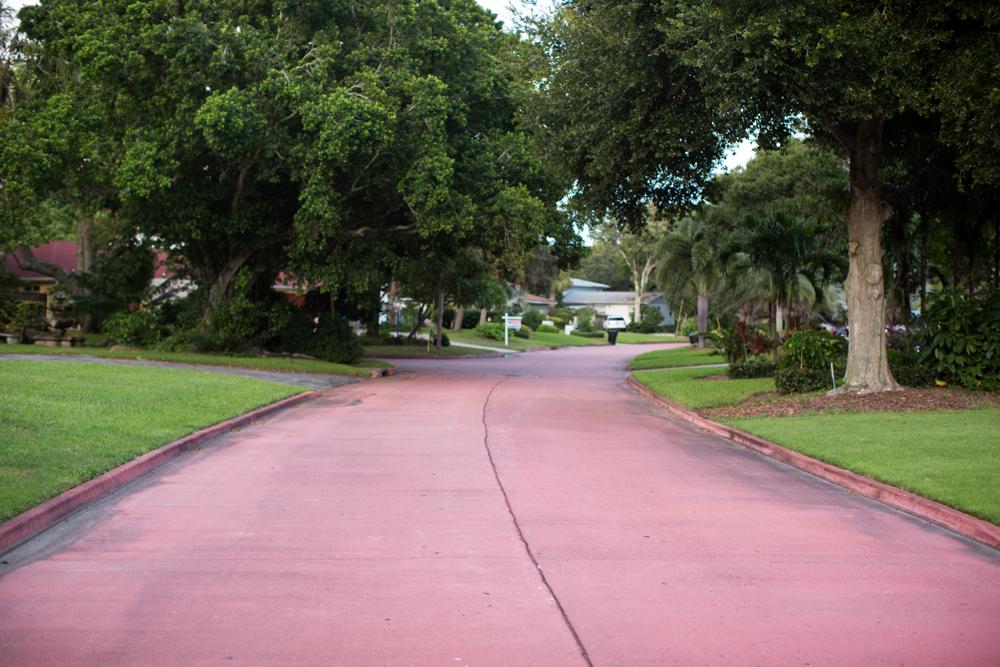
The Pink Streets are in Greater Pinellas Point at the southern tip of St. Pete, between Park Street South and Boca Ciega Bay. The streets were poured with pink-tinted concrete in the 1920s — an original developer marketing decision that created an enduring identity for the neighborhood.
The neighborhood is not primarily a boating destination. The Boca Ciega Bay frontage exists on the western edge, and some homes on Pinellas Point Drive and adjacent streets have water access. But most of the Pink Streets stock is interior residential, not direct waterfront.
What makes it waterfront-adjacent: quick access to Bay Vista Park and the Boca Ciega Bay waterfront, proximity to Tierra Verde and the Pinellas Bayway, and the presence of a handful of true waterfront lots on the bay edge where waterfront homes approach the low millions.
HOA: The Greater Pinellas Point Civic Association charges $20 per year — one of the lowest organized association dues in any St. Pete waterfront-adjacent neighborhood.
Price range 2026: $350,000–$1.2M, with the waterfront bay-edge lots at the top of that range.
Jungle Terrace and Jungle Prada
Jungle Terrace and its adjacent Jungle Prada enclave occupy the northwest quadrant of St. Pete along the shores of Boca Ciega Bay. The name comes from the Jungle Prada archaeological site — this land was originally inhabited by the Tocobaga people and later developed as part of the 1920s land rush.
Architecture: primarily 1950s-1960s mid-century ranch homes, with some newer builds. The waterfront lots along Boca Ciega Bay are the most valuable. From here, boaters access the Intracoastal Waterway and can be through John's Pass to the Gulf of Mexico in under 30 minutes.
Flood zone: Bay-adjacent lots are AE. Interior Jungle Terrace is a mix; some streets are Zone X. The west-facing bay exposure means the flood zone calculation depends heavily on whether your lot has natural or built-up elevation.
Price range 2026: $375,000–$1.4M, with Boca Ciega Bay frontage at the upper end. Mid-century interior homes start in the $375K–$550K range and represent some of the best value mid-century stock in St. Pete.
Boat access: Intracoastal Waterway access is straightforward from the bay frontage. John's Pass is the primary Gulf outlet. For powerboaters running to the Gulf frequently, this side of St. Pete is shorter to open water than the east bay side.
Tierra Verde
Tierra Verde is an island — actually a collection of dredged-fill islands connected by the Pinellas Bayway — located south of the mainland and immediately north of the Sunshine Skyway Bridge. Fort De Soto County Park, 1,136 acres of some of the best public beach in Florida, is right at the southern tip.
This is the highest-priced waterfront community in Pinellas County outside of Belleair Beach and Indian Rocks Beach. The median sale price in 2025-2026 is approximately $1.1M–$1.25M; the average skews to $1.7M because of the luxury bayfront estates. The top end goes to $5M+ on open Tampa Bay lots.
Six subdivisions make up Tierra Verde: Entrada, Monte Cristo, Pinellas Bayway, Sandpoint, East Shore, and West Shore. East Shore and West Shore have the most direct open-water exposure. Monte Cristo is the most upscale. Entrada has more condos and attached townhomes.
Boat access: Tierra Verde is the St. Pete neighborhood with the fastest access to open Gulf water. The channel out to the Skyway and the Gulf runs at 15–20 feet depth. Sailboats, trawlers, and large sportfishers all live here. The only constraint is the Pinellas Bayway toll bridge — no height constraint, just a $1.50 toll.
Flood zone: AE on the canal and open-water lots. Some interior streets approach Zone X. Because of the bayfront and Gulf exposure, VE zones exist on the most exposed open-water lots. Full-replacement flood insurance on a Tierra Verde bayfront home often runs $8,000–$15,000 per year. It is baked into the carrying costs here.
HOA: Varies by subdivision. Monte Cristo has an active HOA. Most of the subdivisions have deed restrictions enforced by the Tierra Verde Property Owners Association.
Bayway Isles and Pasadena
Bayway Isles is a gated community on the Pinellas Bayway, southeast of St. Pete between the mainland and Tierra Verde. It is not technically in the city limits but functions as a St. Pete waterfront community for buyers who want gated security and Bayway access without the Tierra Verde price premium.
Properties range from one-bedroom condos starting around $250,000 to large single-family bayfront homes approaching $7M. The mid-tier — a 3/2 with water access — sits in the $600,000–$900,000 range. HOA fees vary significantly by sub-association within the gate.
Pasadena, just north of St. Pete Beach on Boca Ciega Bay, is not a gated community but shares similar water access characteristics — Intracoastal access via Boca Ciega Bay, mid-century to 1970s housing stock, and price points in the $400,000–$1M range for waterfront properties.
Flood zone: Both are predominantly AE. Boca Ciega Bay-facing lots in Pasadena carry similar insurance exposure to Jungle Terrace.
Things Every St. Pete Waterfront Buyer Must Check
Regardless of which neighborhood you are looking at, these are non-negotiable due-diligence items before you make an offer on any St. Pete waterfront property.
- Flood zone and FEMA FIRM map: Look up the specific parcel on the FEMA Flood Map Service Center (msc.fema.gov). AE and VE are mandatory insurance zones if you have a mortgage. Even if you pay cash, flood insurance is worth every dollar in this market.
- Elevation certificate: If the listing does not include a current elevation certificate, order one before offer or make its receipt a due-diligence condition. The certificate sets your flood insurance premium. A home at BFE +2 versus BFE -1 can be a $3,000/year difference in annual premium.
- Seawall age and condition: Seawalls in St. Pete are typically concrete or vinyl sheet pile. Concrete seawalls have a 30-50 year lifespan; vinyl lasts 20-30 years. A failed seawall replacement runs $300-$800 per linear foot in Pinellas County. For a 100-foot lot, that is $30,000-$80,000 out of pocket. Any offer on a waterfront home should include a professional seawall inspection.
- Dock permit and lift inspection: Confirm the dock was permitted through the City of St. Petersburg and/or Florida DEP. Unpermitted docks are not grandfathered — the city can require removal at owner expense. If there is a boat lift, get the lift manufacturer specs and a load-rated inspection. A failed lift drops your boat into the water.
- Hurricane history: Ask specifically about Helene and Milton (September-October 2024). Both storms caused surge flooding across wide areas of St. Pete. If the home has a flood loss history, that affects future insurability under NFIP and is a required disclosure in Florida.
- Insurance quote before offer: Get a bindable flood plus wind insurance quote from at least two carriers before signing a purchase contract. Post-Helene/Milton, some Pinellas County areas have seen non-renewals and rate increases that affect the total cost of ownership significantly. In some cases the combined insurance cost makes an otherwise-affordable home financially impractical.
- Water type: Understand whether you are buying open Tampa Bay frontage, a canal with a fixed bridge, an Intracoastal-connected canal, or a bayou. The water type determines what boats can use the dock, what the flood exposure profile is, and what future resale demand will look like from boaters.
- Channel depth at mean low water: Get the actual depth sounding from the county or a surveyor, not the listing agent's estimate. Approximately 6 feet can mean anything from 4.5 to 9 feet depending on who measured when.
“The insurance call should come before the offer, not after. Once you are under contract, the urgency changes what options you are willing to consider. Checking first tells you whether you actually want to make the offer at all.”
How to Start Your Search
If you are orienting yourself across these neighborhoods for the first time, I would suggest visiting Coffee Pot Bayou Road in Old Northeast and the main canal street in Venetian Isles on the same day. That drive shows you the full range — historic architecture and shallow water versus purpose-built boater access with deep canals. Most buyers find themselves definitively on one side or the other within an hour.
For a deeper understanding of the flood picture in St. Pete, the flood zone explainer I wrote covers exactly how to read a FEMA FIRM map and what AE vs. VE actually costs in premium terms: /blog/florida-flood-zone-explainer.
For the broader waterfront due diligence checklist — seawall, dock permits, lift inspection, sailboat water versus fixed-bridge limitations — the full buying guide is at /blog/buying-a-waterfront-home-in-florida.
The St. Petersburg community overview with neighborhood links is at /communities/st-petersburg.
Ready to start looking at specific homes? /home-search lets you filter by neighborhood, water access, and price range across active listings.
Nearby
Neighborhoods featured in this post
 Featured
Shore Acres
St. Petersburg
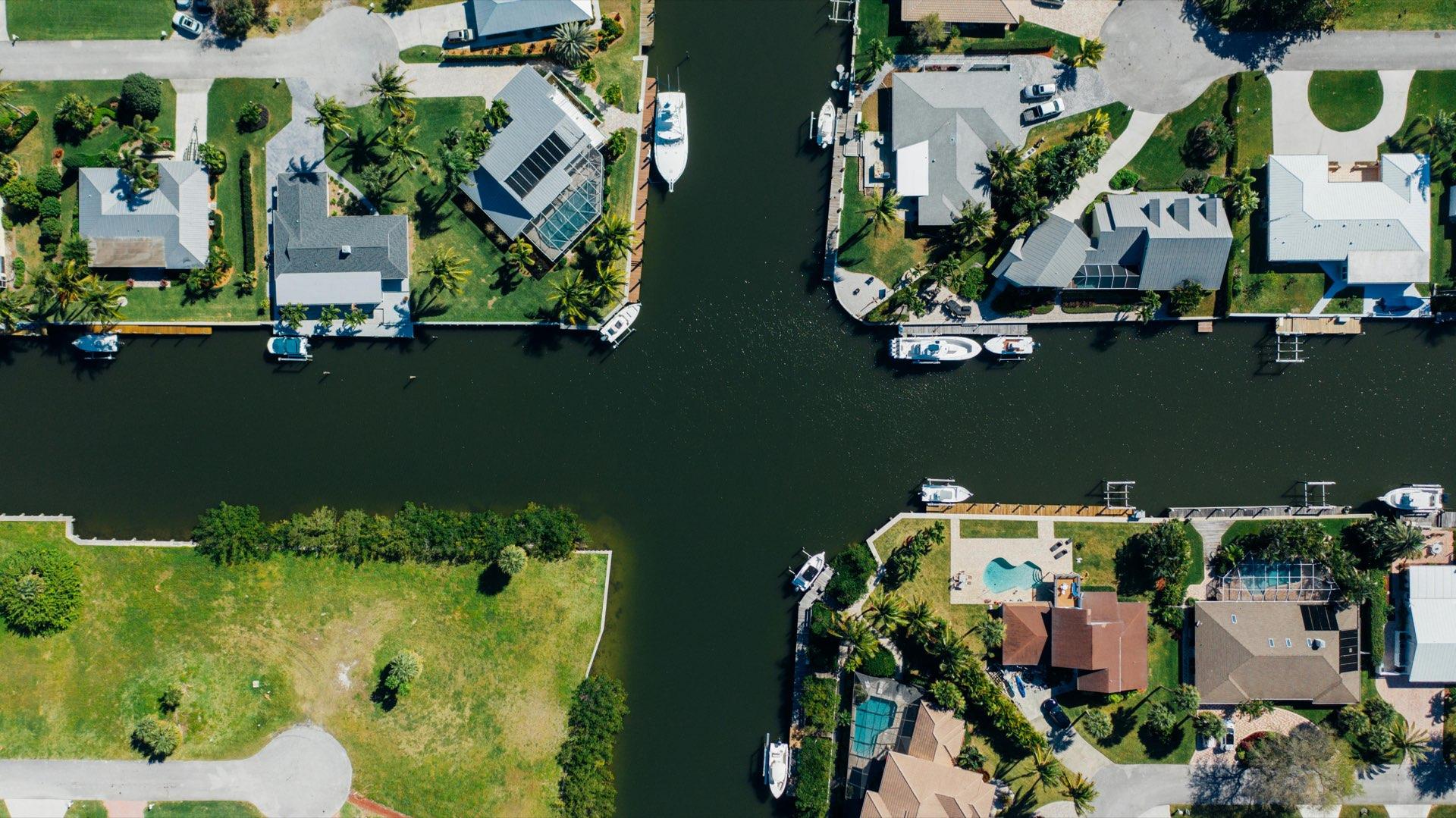
Shore Acres is a northeast St. Petersburg peninsula neighborhood where water borders three sides — Old Tampa Bay, Smack's Bayou, and Pappy'…
 Featured
Tierra Verde
Tierra Verde
Tierra Verde is an island community at the foot of the Pinellas Bayway where every street ends at a canal, a bay-front lot, or Fort De Soto…
 Featured
Pink Streets
St. Petersburg
Lakewood Estates in south St. Pete, where the streets are literally pink — 4.5 miles of rose-tinted concrete poured in the 1920s that the c…
 Featured
Snell Isle
St. Petersburg
Dockside estates on a Mediterranean-inspired island, moments from downtown St. Pete.
Questions about your own market?
Reach out for a tailored take on your neighborhood, timeline, or price band.