
— Ben Laube Homes Blog
Moving to Orlando from Out of State: What to Know Before You Sign
People moving to Orlando from New York, New Jersey, Illinois, and California usually have two things in common: they are tired of the cold, and they did the math on state income tax. Florida has none. On a $150,000 household income, that is roughly $9,000–$13,000 a year in your pocket depending on what state you left. That single fact reshapes the entire cost-of-living comparison.
That said, Orlando is not cheap. The median home price in the metro sits around $367,000 as of early 2026, and insurance — wind and flood — adds real carrying cost that most national cost-of-living calculators undercount. Here is how to think through the move honestly.
The No-Income-Tax Math (and the Offsets)
Florida has no state income tax and no estate tax. That is the headline. The offset is property taxes: Florida’s effective rate runs about 0.83% annually, which on a $400,000 home is roughly $3,300 per year. That is lower than New Jersey (2.2%+), Illinois (2.1%+), and New York (1.4%+ in most suburbs).
The bigger offset most transplants underestimate: homeowners insurance. If you are buying in Orange County, expect $3,000–$5,000 a year for a typical single-family home, more if it is older construction or near a flood zone. Factor that into your monthly budget before you lock in a price range.
One protection that helps: Florida’s Save Our Homes cap limits assessed value increases to 3% per year once you establish homestead exemption. If you buy and hold, your effective tax bill grows slowly even if the market runs. Here is how that cap works in detail: /blog/florida-property-tax-cap-save-our-homes.
Hurricane Season: The Honest Version
Hurricane season runs June 1 through November 30. Most Central Florida relocation buyers worry about hurricanes more than they need to — and worry about the wrong things.
Orlando sits 60 miles inland from either coast. By the time a storm tracks across the peninsula to Orlando, it has typically weakened significantly. The greater risks for inland Orange County are flooding from rainfall (not storm surge), downed trees from wind gusts, and multi-day power outages. Coastal communities in Tampa Bay and the St. Pete beaches face a materially different risk profile.
What matters when buying: check the FEMA flood zone designation before you make an offer. Homes in Zone AE or VE carry mandatory flood insurance requirements; homes in Zone X do not. I always pull the flood zone map as part of my buyer review process. Here is a full breakdown of what wind and flood coverage actually costs: /blog/hurricane-insurance-guide-florida.
The I-4 Corridor: Understanding the Geography
Interstate 4 is the spine of Central Florida, running roughly southwest to northeast from Tampa through Orlando to Daytona Beach. When locals talk about the I-4 corridor, they mean the roughly 100-mile stretch of suburbs, theme parks, office parks, and municipalities strung along it.
From a real estate standpoint, your location on the I-4 corridor determines your commute reality, your school district, and your hurricane risk. West of downtown Orlando (toward Universal, International Drive, Windermere, and Winter Garden) has a different character than east (toward Lake Nona, the airport, and the Space Coast suburbs of Oviedo and Sanford).
Traffic on I-4 is the most common complaint from transplants who moved without accounting for it. The express toll lanes (opened in phases starting 2023) do help during peak hours. But Orlando is fundamentally a car city. There is no practical subway system, and SunRail covers limited corridors. Build 20–30 minutes of buffer into any commute estimate before you choose a zip code.
Neighborhoods by Life Stage
For Families
School zoning drives family home searches more than anything else in the Orlando metro. Orange County Public Schools is the sixth-largest district in the country, which means quality varies dramatically by zone. The neighborhoods with the most consistent scores — A-rated elementaries and middle schools — cluster in a few specific areas:
- Baldwin Park (near UCF and the Fashion Square corridor) — newer construction, A-rated schools, walkable town center, tight community feel. See /communities/baldwin-park.
- Winter Park — established city with its own school district (separate from OCPS), top-rated public schools, historic neighborhoods, tree canopy. Prices reflect the demand: median above $600,000 for single-family. See /communities/winter-park.
- Lake Nona — the fastest-growing submarket in the metro, master-planned, convenient to the airport, strong school pipeline. Lots of new construction. See /communities/lake-nona.
- Windermere — larger lots, Butler Chain of Lakes access, top schools. Entry-point single-family starts around $500,000; lakefront homes are well above $1M. See /communities/windermere.
For Young Professionals
If you are moving solo or as a couple without kids, the calculus shifts toward walkability, nightlife, and commute to employment hubs. Downtown Orlando, College Park (just northwest of downtown), and the Milk District have the most urban feel in the metro — coffee shops, bars, trails, and sub-5-minute Uber rides to most venues.
Winter Park’s Park Avenue is also worth considering: smaller footprint, walkable retail, Amtrak-adjacent if you need to get to South Florida occasionally. Prices are higher per square foot, but the lifestyle trade-off is real.
For Retirees and 55+ Buyers
The Kissimmee and Osceola County side of the metro has lower price points than Orange County and strong 55+ community inventory. For buyers who want resort-style amenities without the HOA price tag of Sarasota or Naples, communities along US-192 and around Celebration offer a solid value.
If you are drawn to outdoor recreation and lake access, the Four Corners area (where Orange, Osceola, Polk, and Lake counties meet) has a wide range of price points and is close to both Disney and the Peace River watershed.
The Theme Park Job Economy
A significant portion of the Orlando workforce is tied to hospitality and tourism — Disney, Universal, SeaWorld, convention center hotels, and the massive services industry around them. If your income is not in that sector, you will find plenty of non-tourism employers: healthcare (AdventHealth, Orlando Health, and the Lake Nona medical city anchored by USTA, Nemours, and the UCF medical school), simulation and defense tech (Lockheed, L3Harris, Boeing all have significant local operations), and finance and insurance back-offices.
Remote workers have driven a meaningful share of recent in-migration. Orlando’s lower cost base relative to coastal metros makes it attractive for people who kept California or Northeast salaries when their companies went permanent-remote. If that is your situation, factor in that Florida has no non-compete law, which is relevant if you ever change jobs.
What to Do Before You Make an Offer
- Establish your school zone first. Do not fall in love with a house before you know which elementary it feeds. OCPS’s school finder tool is the authoritative source; the Realtor MLS field sometimes lags boundary changes.
- Pull the flood zone map for every property you tour seriously. One call to your insurance agent with the property address will give you a realistic insurance quote before you go under contract.
- Budget insurance into your monthly payment, not as an afterthought. The PITI calculation (principal, interest, taxes, insurance) in Florida skews higher on the insurance line than most transplants expect.
- Get pre-approved with a lender who does Florida loans regularly. Florida has some closing cost quirks — doc stamps on the deed, title agency fees, and the survey expectation — that catch out-of-state buyers off guard.
- Spend a week here before signing anything. Traffic patterns, humidity in July, and the actual commute from that Windermere listing to your Orlando office are things you should experience before you commit.
Working with a Local Agent
Out-of-state buyers often start the search on Zillow, Redfin, or Realtor.com and arrive with a shortlist. That is a reasonable starting point. Where it breaks down: national platforms do not capture school zone boundaries, do not flag flood zones prominently, and do not flag CDD fees — community development district assessments that can add $1,000–$3,000+ per year to ownership costs in newer Orlando-area master-planned communities.
I work with relocation buyers across the Orlando metro — Baldwin Park, Winter Park, Lake Nona, Windermere, and the surrounding submarkets — and can help you pressure-test a shortlist before you fly down for tours. If you are serious about making a move, reach out and we can go through the specific questions that matter for your situation: /contact.
“The out-of-state buyers who land well are the ones who did their school-zone and insurance homework before they picked a neighborhood, not after.”
Nearby
Neighborhoods featured in this post
 Featured
Oviedo
Oviedo
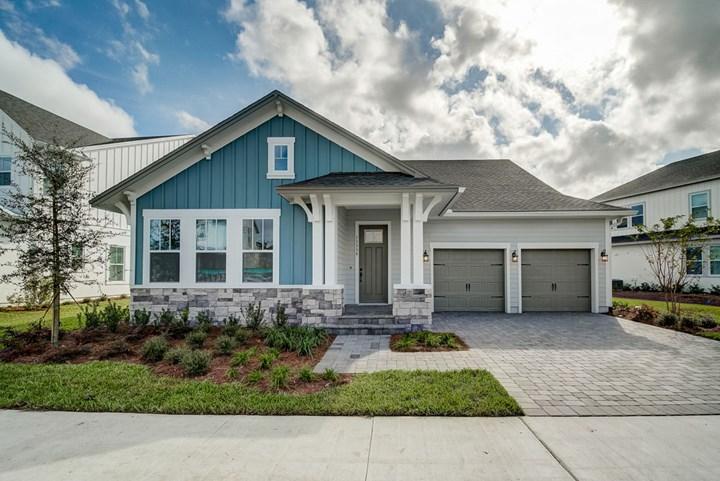
Oviedo is the Seminole County city where Hagerty High School's #1 county ranking and a free-roaming chicken flock share a zip code — a subu…
 Featured
Lake Nona
Orlando
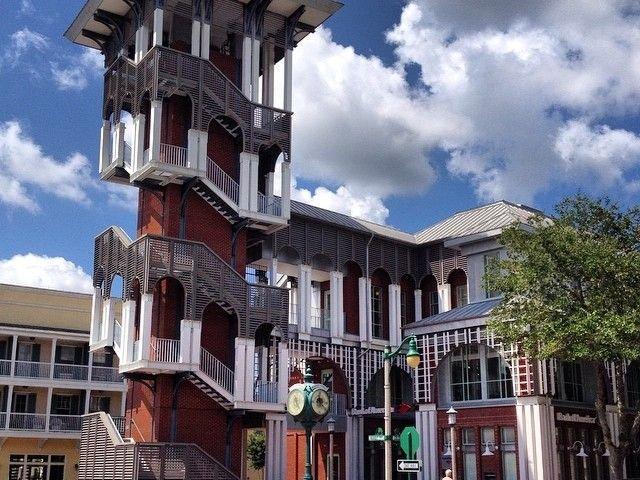
Southeast Orlando's 17-square-mile master-planned community built around a 650-acre Medical City campus — UCF Health Sciences, Nemours Chil…
 Featured
Celebration
Celebration
Celebration is Walt Disney Company's master-planned new urbanist town — built from scratch in 1996 on 4,900 acres west of Kissimmee, with a…
 Featured
Baldwin Park
Orlando
Master-planned urban village built on the former Orlando Naval Training Center. Walkable streets, New England architecture, and three lakes.
Questions about your own market?
Reach out for a tailored take on your neighborhood, timeline, or price band.